
Learn how to change accounting provider Singapore without stress. Stay compliant, keep filings on track, and avoid costly mistakes.
Switching accounting providers in Singapore usually takes 4-8 weeks. There is no penalty for making a change, as long as your filings stay accurate and on time under the Accounting and Corporate Regulatory Authority and the Inland Revenue Authority of Singapore rules.
In practice, it comes down to giving notice, handing over records, and updating access to your accounting systems. Your company keeps full control of its financial records and statutory documents throughout. Most businesses get through it without much disruption if they stay organised. Keep reading for a step-by-step view of how to avoid delays.
Before You Change Your Accounting Provider Singapore
Before moving forward, keep these key points in mind when changing accounting providers in Singapore.
- Switching providers takes 4-8 weeks with proper planning and does not require regulator approval
- Your company stays responsible for tax filings, annual return filing, and statutory registers at all times
- A smooth transition depends on a complete document handover and continued access to your accounting systems
When Should You Change Your Accounting Provider?
Most businesses don’t decide to switch all at once. It usually happens after the same issue shows up a few times, deadlines are missed, numbers need correction, or simple questions take too long to answer. It becomes more noticeable during the financial year-end, when the margin for error is smaller under the Companies Act.
Late GST returns, mistakes in financial statements, or missed annual return filing deadlines are hard to ignore. These aren’t small admin issues. They can lead to penalties or create problems during audits. Providers such as Duellix emphasize proactive communication to prevent these common compliance gaps.
Cost also comes into play. Fees go up, but the level of support does not change much. Reports arrive late, or there is little input on tax matters. At that point, many businesses start looking elsewhere.
Timing the move helps. Some wait until the financial year-end is closed, and others wait until after GST F3 submission. Either way, the idea is the same: switch when there is less active reporting work.
Common signs include:
- Filings that come in late or need fixing
- Replies that take longer than expected
- Fees are increasing without much change in service
- Limited input on tax or compliance matters
A switch at the right point in the cycle keeps things from getting messy.
What Are the Legal Requirements to Switch in Singapore?
Switching accounting providers in Singapore is straightforward. There is no penalty, and no approval is needed from the Accounting and Corporate Regulatory Authority, as long as filings continue on time.
The key point is responsibility. It stays with the company. Even if an accounting firm or a corporate secretarial provider handles the work, the company is still accountable for keeping proper financial records, maintaining statutory registers, and meeting deadlines.
As highlighted by the Accounting and Corporate Regulatory Authority (ACRA)
“The law requires every incorporated entity to appoint a qualified individual within six months [of a vacancy]. Navigating the official switch involves obtaining clear resignations and submitting precise notifications. A methodical sequence prevents compliance gaps and protects director liability. All necessary documents must be submitted to ACRA within 14 days to formalize the changes. This proactive documentation creates a clear audit trail for the entire transition.” – Accounting and Corporate Regulatory Authority (ACRA)
Your records belong to you under the Income Tax Act and the Companies Act. That includes:
- Financial statements and trial balances
- Tax returns and GST filings
- Bank reconciliation records
- Corporate secretarial documents
There is also no need to inform ACRA when changing accounting providers. This is different from changes involving a company secretary, auditor, or nominee director, where updates must be filed through BizFile⁺.
As long as deadlines are met, the change can happen at any time.
How to Notify Your Current Accounting Firm Properly?
Ending the engagement is usually a routine step. Most firms require about 30 days’ notice. Keeping the message clear helps avoid delays later.
Start with the engagement letter. It usually sets out:
- The notice period
- Any outstanding fees
- The process for handing over documents
Insights from the Institute of Singapore Chartered Accountants (ISCA) indicate
“Professional accountants in public practice and professional firms. must comply with the Code of Professional Conduct and Ethics. When a client seeks to change accountants, the existing accountant must, upon receiving the client’s permission, provide the successor with all information necessary for the successor to decide whether to accept the engagement. This ensures the protection of the public interest and promotes public confidence through a robust and ethical handover process.” – Institute of Singapore Chartered Accountants (ISCA)
The notice itself does not need to be long. A short email is enough. State the end date and move on.
A typical approach:
- Check the contract terms
- Send written notice by email
- Confirm the final service date
- Ask when the documents will be handed over
If communication slows, follow up in writing and refer to your right to access company records under IRAS rules.
A steady, direct approach here makes the handover easier.
What Documents Should You Collect Before Switching?
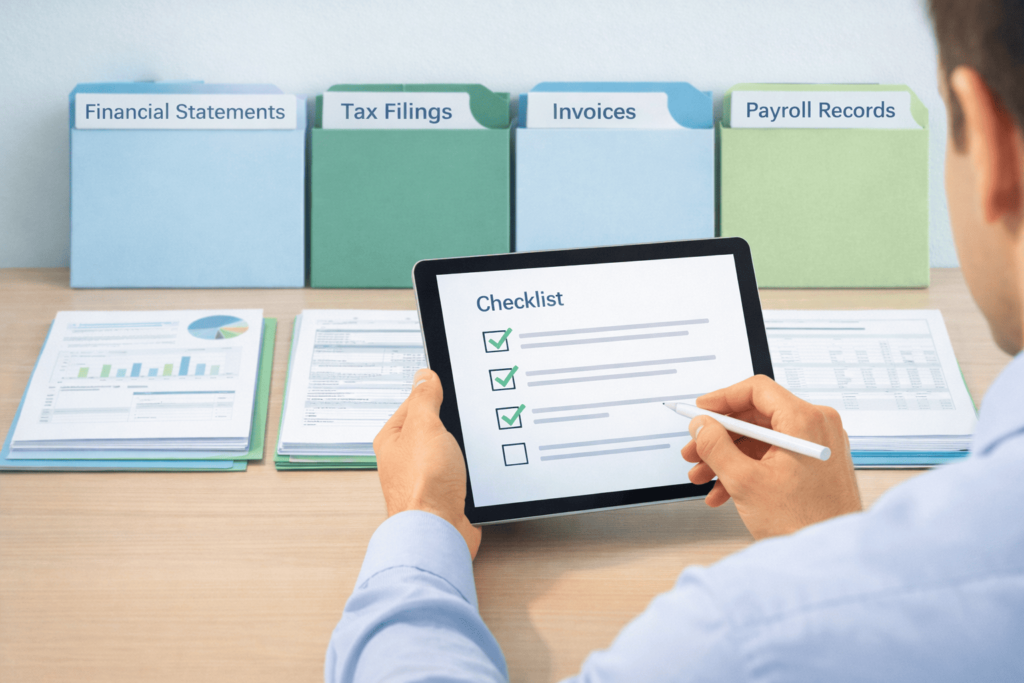
Before changing providers, sit down and gather your records. You will need at least 5 years of financial and tax documents to stay aligned with IRAS requirements.
If something is missing, it usually shows up later, when the new accountant asks for it, or when a filing cannot be completed on time. That is where delays start.
Make sure you have:
- Financial statements, including profit and loss and balance sheet
- Tax filings such as Form C-S or ECI
- GST returns and any IRAS correspondence
- ACRA filings and AGM records
- Fixed asset register and liability details
- Bank statements with reconciliation reports
These are not just for compliance. They show what has already been done, and what still needs checking.
Having everything ready saves time during the switch.
How to Transfer Accounting Software and Access?
With cloud systems like Xero or QuickBooks, you are not moving data. You are changing who has access. Firms like Duellix typically assist in managing these permissions to ensure your historical data remains intact.
The steps are usually straightforward:
- Add the new accountant as an adviser
- Pass admin access to your company or the new provider
- Remove the previous provider’s access
- Update your tax agent in the IRAS myTax Portal
If access is handled properly, nothing gets lost. Your past records stay where they are.
It is also worth checking a few things that are easy to overlook:
- Digital certificates
- GST InvoiceNow setup
- Login details for filing portals
Losing access to any of these can slow things down later.
How to Onboard a New Accounting Provider Effectively?
The first handover sets the tone. If the new provider gets clear information early, there is less back-and-forth later.
Start with the basics:
- Financial year-end
- GST registration status
- Payroll and employee details
- Any ongoing tax or audit matters
Then go over the deadlines together:
- Estimated Chargeable Income due within 3 months after the financial year end
- GST filing dates
- Annual return submission
Once these are clear, the new provider can get to work without having to fill in gaps.
What Are the Common Mistakes to Avoid When Switching?

Most problems don’t come from the switch itself. They come from small things being missed along the way.
A common one is timing. Changing providers halfway through a GST cycle, without checking what has already been filed, can leave loose ends. Another is ending the service too early, before all records are collected.
Access is another area people forget about. Logins, software access, and filing portals, if these are not sorted out, work slows down quickly.
You will often see issues like:
- Switching while the GST work is still in progress
- Not getting a full set of records before the handover
- Losing access to accounting systems or accounts
- Choosing based on price alone
Late GST filings can result in hundreds SGD fines, and they add up if delays continue.
A bit of coordination up front avoids most of this. It is usually not complicated, just easy to overlook.
Should You Switch or Use DIY Accounting Tools Instead?
Some businesses keep things in-house and only get help for filings. This is often done to keep costs around hundreds to thousands SGD per year.
It can work, but it shifts more of the work back to the business.
| Option | Cost | Control | Risk |
| Full-service firm | Higher | Lower | Lower |
| DIY + filing service | Medium | Higher | Medium |
| Full DIY | Lower | Higher | Higher |
Before going down this route, it helps to think about how things run day to day:
- Are records kept up to date without reminders?
- Can the team handle bookkeeping without it falling behind?
- Are filing deadlines clear and tracked?
Handling it internally gives more control, but there is less margin for error if something gets missed.
FAQ
How do I start the transition process when changing an accounting provider in Singapore?
Start by planning your transition process early and setting a clear timeline. Review your financial statements, tax filings, and statutory documents in detail. Inform your current corporate service provider and submit a proper resignation letter.
Confirm your financial year-end dates. Make sure your new provider can handle bookkeeping services, GST returns, and annual return filing without delays or confusion.
What documents should I prepare before switching accounting providers?
You should prepare complete financial records, including bank statements, trial balances, and source documents. Gather statutory registers, annual reports, and past tax returns.
Include company secretary records, GST filings, and your compliance calendar. Complete and organized documents help prevent data loss, reduce compliance risks, and ensure a smooth handover process between your old and new providers.
Will changing a corporate secretarial provider affect my compliance obligations?
Changing your corporate secretarial provider does not remove your legal duties under the Companies Act. You must continue meeting filing requirements, including annual return submissions and statutory updates.
Ensure your new corporate secretary manages statutory documents, audit appointments, and regulatory notices correctly. Strong corporate governance and ongoing governance support help reduce compliance risks during and after the transition.
How long does it take to switch accounting providers in Singapore?
The processing time depends on your company’s size, transaction volumes, and record quality. A simple business may complete the switch within a few days, while more complex cases can take several weeks.
The handover procedures include reviewing financial records, GST F3, and tax filings. A clear transition process reduces delays and maintains a stable compliance environment.
What risks should I watch for when changing accounting providers?
You should watch for transition risks such as missing financial records or weak handover procedures. Data loss, incomplete statutory documents, and missed tax filings can lead to penalties.
Confirm your new provider understands GST returns, your compliance calendar, and corporate secretarial support requirements. Clear communication and proper tax planning protect your business cycle, profitability analysis, and overall legal and compliance position.
Final Thoughts on Changing Accounting Provider Singapore
You already know the move is simple. Four to eight weeks, clean handover, no penalties if filings stay on time. So the real question isn’t how, it’s why wait? Every month you stay with the wrong provider slows you down. Less clarity. Less control. Less progress.
If you’re ready to move, start with Duellix. Don’t let delay cost you time or growth. A better setup is within reach, and it starts with one decision.
References
- https://www.acra.gov.sg/manage/corporate-service-providers/overview/
- https://isca.org.sg/standards-guidance/ethics-%28ep-100%29/implementation-guidance